
Understanding Gift Card Types

Not all gift cards work the same way. The two primary categories — closed-loop and open-loop — have meaningfully different fee structures, acceptance networks, and regulatory treatment.
Closed-Loop (Store-Branded) Cards
These cards are issued by a specific retailer or restaurant group and can only be redeemed at that merchant's locations and website. Examples include department store cards, restaurant chains, and single-brand digital cards. Closed-loop cards typically have no purchase fee and fewer ongoing charges, making them the simpler category from a consumer standpoint.
Open-Loop (Network-Branded) Cards
Open-loop cards carry a major payment network logo and function wherever that network is accepted. They are often called "prepaid debit cards" or "general purpose reloadable" cards depending on whether they can be reloaded. Open-loop cards routinely include a purchase/activation fee, and many carry monthly maintenance fees after an initial period of inactivity. The CARD Act's dormancy fee restrictions apply in full to open-loop gift cards.
Key distinction: Open-loop cards are subject to the same CARD Act protections as closed-loop cards — the federal rules cover both. Some open-loop cards are also subject to state unclaimed property (escheatment) laws once a balance is deemed abandoned.
Checking Your Card Balance
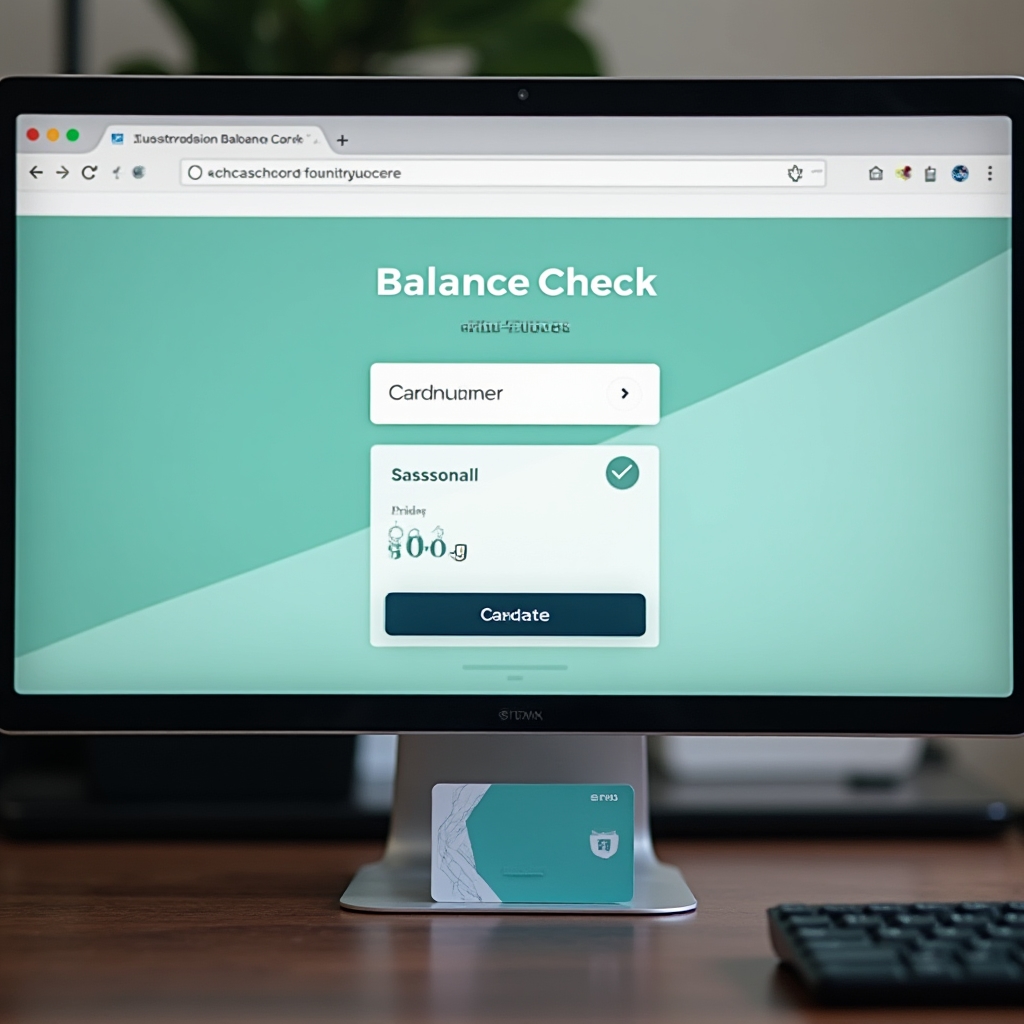
Knowing your remaining balance before attempting a transaction prevents declined payments and avoids the awkward situation of splitting a purchase across multiple cards at checkout. There are three reliable channels for checking a balance:
1. Retailer Website or Mobile App
Most major retailers provide a dedicated balance-check page — typically found under "Gift Cards" in the site's footer or account menu. You will usually need the 16–19 digit card number and, for security, the PIN printed on the back. Mobile apps from retailers or card networks increasingly allow balance checks without navigating the full website.
2. Phone Hotline
An 800-number is printed on the back of virtually every gift card and on the original packaging. Automated balance systems are available around the clock; live agents are typically reachable during business hours. Have the card number and PIN ready before you call.
3. In-Store Register Check
Any cashier at the issuing retailer can run a balance inquiry at point of sale without completing a transaction. This is the most reliable method when the card's magnetic stripe or chip needs to be confirmed as functional, and is useful if online or phone systems are unavailable.
Security note: Never use a third-party "balance check" website that asks for your card number unless it is the official retailer domain or the card network's own site. Fraudulent balance-check sites harvest card numbers to drain balances.
In-Store Redemption

Using a gift card in person is usually straightforward, but a few details can prevent problems at the register.
Standard Closed-Loop Redemption
At checkout, inform the cashier you are paying with a gift card before they begin the transaction. Swipe, tap, or insert the card when prompted. If your purchase total is less than the card balance, the remainder stays on the card for future use. If your total exceeds the balance, you can use a second payment method to cover the difference — this is called a split-tender transaction.
Split-Tender Transactions
Not all point-of-sale systems handle split-tender identically. In most cases: (1) tell the cashier the exact amount to apply from the gift card; (2) the register deducts that amount; (3) you pay the remainder with cash, credit, or debit. Self-checkout lanes may prompt you to enter the gift card amount manually. If the register does not support split payments, have the cashier process the gift card as a partial payment and use a separate terminal for the remainder.
Federal CARD Act Protections
The Credit Card Accountability Responsibility and Disclosure Act of 2009 — the CARD Act — included a section specifically addressing gift cards. Implemented by the Federal Reserve's Regulation E, these rules set a federal floor that applies in every US state.
Minimum 5-Year Validity Period
A gift card purchased on or after August 22, 2010 must remain redeemable (able to be used for its full stated value) for at least 5 years from the purchase date. If the card is reloaded, the 5-year clock restarts from the date of the most recent load. Promotional cards with no purchase price are excluded from this requirement.
12-Month Dormancy Fee Grace Period
No inactivity, dormancy, or service fee may be imposed until the card has gone unused for at least 12 consecutive months. "Unused" means no purchase, reload, or balance inquiry — the triggering activity varies by issuer, so read your card's terms carefully.
One Fee Per Monthly Period
After the 12-month grace period expires, issuers may charge a dormancy fee, but only one fee per monthly billing period. If a card has multiple fee types (e.g., a service fee and a statement fee), only one may be charged per month.
Clear Pre-Sale Disclosure
All applicable fees, the applicable expiration date (if any), and a toll-free customer service number must appear on the card, its packaging, or a sticker attached to the card. Fees that are not disclosed in this manner may not be charged.
Where the rules come from: The gift card rules are codified at 15 U.S.C. § 1693l-1 and implemented through 12 C.F.R. Part 205, Subpart E (Regulation E). The federal consumer financial protection bureau publishes plain-language summaries on its official website.
Lost, Stolen, or Damaged Cards

Federal law does not require issuers to replace lost or stolen gift cards. Protection is entirely at the issuer's discretion — but many major retailers do have voluntary replacement programs.
Steps to Take Immediately
- Locate your original receipt. Most replacement programs require proof of purchase.
- Note the card number if you have it recorded. Many programs require this to locate the account.
- Call the issuer's customer service number (printed on the receipt or on the issuer's website) as soon as possible — some issuers can flag the card number and prevent further use.
- Ask specifically about the replacement policy, required documentation, and any applicable fees for card replacement.
- Government-issued ID may be required to complete the replacement process.
Damaged Cards
If the magnetic stripe or chip is unreadable, most issuers will exchange a damaged card at customer service. Bring the original receipt if available. For minor damage, many cashiers can key-enter the card number manually instead of swiping.
Prevention tip: Record the card number and original amount on the receipt as soon as you receive the card, and store the receipt separately from the card itself. This single step dramatically improves the odds of successful replacement.
Recognizing and Avoiding Gift Card Fraud

Gift card fraud is one of the fastest-growing categories of consumer fraud in the United States, according to the Federal Trade Commission. The patterns are consistent and recognizable once you know what to look for.
The Universal Red Flag
Any request to pay for goods, services, fees, taxes, or penalties using a gift card is fraudulent. This is the single most reliable indicator. No legitimate entity — not a tax agency, a government benefits office, a utility company, a court, a tech support provider, or a law enforcement agency — ever demands payment via gift card. If someone is asking you to buy gift cards and read them the numbers, it is a scam, regardless of how convincing the story sounds.
Common Fraud Scenarios
- Government impersonation: Caller claims you owe back taxes, your government benefits number was suspended, or there's a warrant for your arrest — payment in gift cards will resolve it.
- Tech support scams: A pop-up claims your computer is infected; the "technician" requests remote access and payment via gift cards.
- Romance scams: An online acquaintance you've never met in person develops a financial emergency requiring immediate gift card transfers.
- Lottery or prize scams: You've "won" a prize but must pay taxes or processing fees using gift cards before you can collect.
- Tampered cards (in-store): Criminals physically tamper with gift cards on retail racks — scratching off PINs, recording numbers, and re-covering them — then drain cards remotely once they're activated. Inspect any card before purchasing; do not buy cards where the PIN area appears scratched or the protective label is damaged.
If You've Been Victimized
Report the fraud to the relevant federal consumer protection agency and to your local law enforcement. Contact the gift card issuer immediately — recovery is rarely possible, but reporting helps the issuer identify patterns and may assist in fraud investigations. Several federal agencies and consumer advocacy organizations maintain updated fraud-reporting databases that can help track the latest variants.